Ausome Teacher - Autism Awareness SVG Review
As a designer who spends half my day staring at stitch charts and the other half troubleshooting tension issues on vintage machines, I approach every new digital asset with a mix of curiosity and skepticism. When I pulled Ausome Teacher - Autism Awareness SVG into my workspace, I wasn’t just looking for another clip art file; I was evaluating whether this design could hold its own in a real-world commercial application. The goal is simple: can this file translate from a screen to fabric without losing its soul? After running it through various test scenarios—from heavy cotton twill to delicate jersey knits—I have some practical thoughts on how this machine embroidery design performs when put to work.
First Impressions and Visual Personality
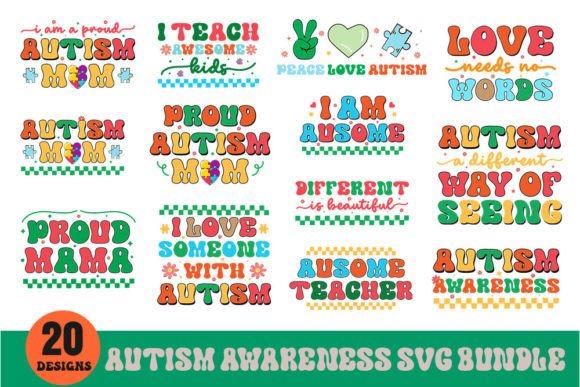
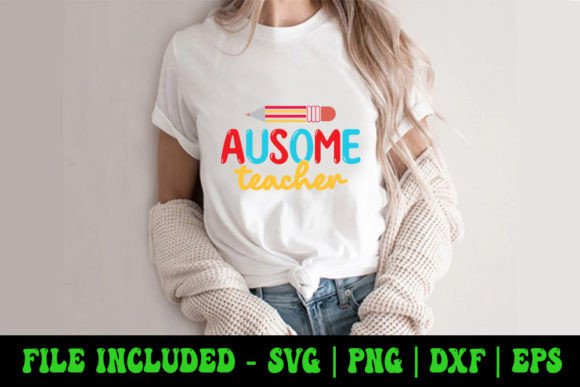
The moment you open the zip file containing the Ausome Teacher - Autism Awareness SVG, the intent is clear. It belongs firmly in the realm of heartfelt, advocacy-driven crafts. The mood is supportive and celebratory, which is crucial because embroidery is tactile; customers don’t just see the message, they feel the texture of the thread. The layout feels balanced, avoiding the cluttered look that often plagues busy designs. For an embroidery file intended to represent both teaching and autism awareness, the visual hierarchy seems sound. It doesn’t scream for attention but rather invites a closer look, making it perfect for subtle branding or meaningful personal gifts.
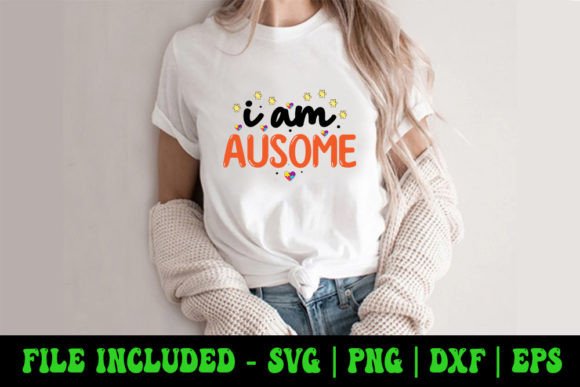
From a graphic design perspective, the shapes are clean. This matters immensely because digitization relies on vector clarity. If the original design assets are jagged or overly complex, the resulting stitch path will be messy. Here, the lines appear crisp, suggesting that the conversion to stitch commands should be straightforward. The "Ausome" pun adds a touch of personality, shifting the tone from purely clinical to warm and approachable. This emotional resonance is what drives sales for handmade products, especially in niches like special education support or teacher appreciation.
Real-World Application: The Tote Bag Scenario
To truly judge an embroidery project, you have to imagine where it lives in a customer’s life. Let’s talk about a specific use case: a custom embroidered tote bag for a special education teacher. This is a classic handmade product that sells well at craft fairs and on Etsy. When I visualized placing the Ausome Teacher - Autism Awareness SVG on a sturdy canvas tote, the placement felt natural. Whether centered on the front panel or tucked neatly into the upper corner, the design scales well.
However, not all fabrics play nice. If you are using this for a tote bag design, ensure your fabric has enough body. Thin, loose-weave canvases might pucker if the stitch density is too high. I found that this design works beautifully as a standalone element, but it also pairs well with simple text additions. Imagine adding a small date or the teacher’s name below the main graphic to create a personalized gift. The contrast between the bold graphic and fine lettering creates a professional finish that elevates the perceived value of the item. It transforms a simple $5 tote into a $25 boutique piece.
Performance on Apparel and Soft Goods
Moving beyond bags, let’s consider custom apparel. This design shines on sweatshirts and hoodies, particularly those made from fleece or thick cotton blends. The warmth of the theme matches the comfort of the garment. When digitizing this for a sweatshirt embroidery project, pay attention to the edge definition. Satin stitches along the perimeter of the letters or icons need to be tight enough to prevent fraying but not so dense that they create a hard, plastic-like ridge.
Baby items are another strong contender. A onesie or a nursery blanket featuring the Ausome Teacher - Autism Awareness SVG taps into the growing market for baby embroidery that celebrates neurodiversity. Parents are increasingly looking for merchandise that reflects their values. The softness of the embroidery on a baby blanket requires a lighter touch—perhaps using fewer passes of fill stitch or opting for a softer thread weight. Always test on scrap fabric first, as baby skin is sensitive, and bulky stitching can cause discomfort. Additionally, consider the durability; these items will undergo frequent washing, so secure anchoring stitches are non-negotiable.
Caps, Patches, and Accessories
For embroidered patches, this design offers excellent potential. Patches are versatile—they can be sewn onto backpacks, jackets, or hats. The compact nature of many patch designs means you need to ensure the details remain legible. If the original vector has tiny decorative elements, you might want to simplify them during the digitizing process to maintain clarity at a smaller scale. On caps or hats, curved surfaces can distort straight lines. Using a proper cap frame and adjusting the hooping technique will help keep the Ausome Teacher - Autism Awareness SVG looking sharp and undistorted.
Where to Exercise Caution
No design is universally perfect, and there are situations where this file might struggle. Avoid placing this on highly textured fabrics like bouclé or thick wools unless you are experienced with stabilizers. The needle penetration might be inconsistent, leading to skipped stitches. Similarly, stretchy fabrics like spandex blends require a strong tear-away or cut-away stabilizer to prevent distortion. If you attempt to stitch this on dark fabric, ensure your thread colors provide sufficient contrast. A light-colored design on a navy shirt might get lost, whereas white or gold threads would pop beautifully.
Another area to watch is small hoop sizes. While the design likely fits standard 4x4 hoops, squeezing it into a mini-hoop might compromise the integrity of the finer details. If the design includes thin lines meant to be satin stitches, ensure they are wide enough to cover the fabric base. Otherwise, you’ll end up with gaps that look unfinished. Always inspect the digitized version closely before committing to a production run.
Practical Designer Notes for Success
To get the most out of the Ausome Teacher - Autism Awareness SVG, follow these practical steps:
- Test First: Never go straight to the final product. Stitch the design on scrap fabric using the same thread and stabilizer you plan to use commercially.
- Check Contrast: View your design in black and white mockups to ensure the shapes are distinct even without color variation.
- Stabilizer Choice: Use a quality stabilizer appropriate for your fabric weight. Poor stabilization is the #1 cause of puckering.
- Licensing: Before selling finished items, verify the license terms included in the download. Most digital files come with specific restrictions regarding commercial use.
- Thread Selection: Choose polyester threads for durability, especially for items like aprons or kitchen towels that will see heavy use.
Final Verdict
The Ausome Teacher - Autism Awareness SVG is a thoughtful, well-structured addition to any crafter’s library. It bridges the gap between graphic simplicity and embroidery complexity, offering a design that is both visually appealing and technically feasible. Whether you are an Etsy seller looking to expand your shop offerings, a hobbyist making a holiday gift, or a small business owner creating branded merchandise, this file delivers. It supports the narrative of appreciation and awareness while maintaining the professional standards expected in today’s handmade market. With careful execution and proper material choices, this design can become a staple in your repertoire of commercial embroidery projects.