Autism Awareness Retro Svg Bundle Review
As a designer who spends half my life troubleshooting stitch paths and the other half worrying about whether a client’s vision will actually survive the embroidery hoop, I approach every new digital asset with a healthy dose of skepticism. The market is flooded with generic shapes and overused symbols, so finding something that balances aesthetic appeal with technical viability is rare. That is why I took a close look at the Autism Awareness Retro Svg Bundle before committing it to any real-world production run. This isn’t just about looking at pretty pictures; it is about understanding how these designs translate from screen to fabric, how they hold up in a small business context, and whether they offer enough value for both personal projects and commercial ventures.
First Impressions: Mood and Visual Personality
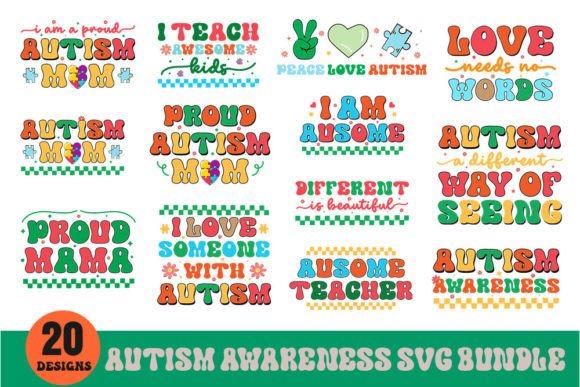
The moment you unzip this collection, the first thing that strikes you is the cohesive retro vibe. We have all seen the standard puzzle piece or ribbon motifs, but this bundle leans into a nostalgic aesthetic that feels fresh rather than derivative. The shapes are clean, the lines are bold, and the overall composition suggests a design philosophy that prioritizes readability—a critical factor when working with thread instead of ink. For an autism awareness theme, there is often a risk of the design becoming too busy or emotionally heavy. Here, the retro styling lightens the mood while maintaining the significance of the cause. It feels approachable, warm, and ready for everyday wear, which makes it ideal for a wide range of applications.
The inclusion of multiple file formats—SVG, PNG, EPS, and DXF—is a significant practical advantage. As someone who frequently switches between vector editing software for resizing and direct-to-film printers or cutting machines, having these variations means less friction in the workflow. You aren’t forced to convert files manually, which reduces the risk of losing detail during the translation process. This versatility immediately positions the bundle as a strong contender for digital product sellers and craft business owners who need assets that work across different platforms.
Real-World Application: From Screen to Stitch
To truly evaluate this machine embroidery design, I imagined placing it on several common products. Let’s start with a custom embroidered tote bag. The retro graphics would pop beautifully on a natural canvas tote, especially if paired with earth-tone threads. The clean lines of the SVG format ensure that even if you scale the design up, the edges remain sharp. However, I would advise against using extremely fine details for the main focal point unless you are using a high-density satin stitch. For a tote bag design, simplicity wins. The bold shapes of this bundle allow for larger fill areas that cover ground quickly, making them efficient for bulk orders.
Next, consider a sweatshirt or hoodie. This is where the retro theme truly shines. A vintage-style autism awareness graphic on a heather grey or navy sweatshirt creates a streetwear aesthetic that appeals to teens and adults alike. When planning this sweatshirt embroidery, pay attention to the placement. Center chest is classic, but a left-chest pocket placement can feel more subtle and modern. The key here is contrast. If you choose dark fabric, you must select bright, saturated thread colors to maintain visibility. The retro palette often works well with creams, yellows, and teals, which stand out nicely against darker backgrounds without requiring excessive underlay stitches.
For smaller items like aprons or kitchen towels, the design’s versatility becomes even more apparent. These items are often gifted or used in home settings, where a touch of personality is appreciated. The bundle’s variety allows you to mix and match elements, creating unique combinations for each order. This is particularly valuable for Etsy sellers looking to differentiate their listings from competitors who use identical stock images. By curating specific elements from this bundle, you create a bespoke feel that justifies a higher price point.
Technical Considerations and Fabric Compatibility
No design is perfect for every surface, and honest review requires acknowledging limitations. While the embroidery file structures in this bundle appear robust, certain fabrics pose challenges. Textured fabrics like heavy waffle-knit blankets or thick fleece can obscure fine details. In such cases, it is crucial to simplify the design or increase the spacing between elements to prevent thread breaks. Similarly, stretchy fabrics like jersey knit require careful stabilization. Without proper tear-away or cut-away stabilizer, the retro shapes might pucker or distort after washing.
Another area to watch is small lettering or intricate accents. If the bundle includes tiny text, test it in black and white mockups first. Often, what looks legible on a screen becomes illegible once stitched due to thread thickness. For personalized gifts, clarity is king. If you are adding names or dates alongside the retro graphic, ensure there is enough negative space around the text to accommodate the stitching process. Dense stitch areas should be avoided on curved surfaces like caps, where tension can vary significantly across the curve.
Impact on Product Value and Brand Consistency
Using a well-designed asset like the Autism Awareness Retro Svg Bundle directly influences customer perception. High-quality graphics signal professionalism. When a buyer sees a crisp, well-executed design on a handmade product, they are more likely to trust the maker’s attention to detail. This builds brand consistency, especially if you are building a shop focused on meaningful, cause-driven merchandise. The retro trend also taps into current consumer preferences for nostalgia and authenticity, which can boost engagement and sales.
Furthermore, the bundle’s adaptability supports various marketing strategies. You can create printable mockups for social media, use the SVGs for digital planners, or offer them as part of a larger design package. This multi-use nature increases the perceived value of your offerings. Whether you are selling finished goods or design assets, the ability to demonstrate how the design looks on different products enhances buyer confidence.
Practical Designer Notes for Implementation
Before launching into production, I recommend following a few best practices. Always test the design on scrap fabric first. This step is non-negotiable for catching issues with thread tension or stabilizer choice. Check the stitch density to ensure it matches the fabric weight; lightweight fabrics need lighter stitches to avoid puckering. Confirm the hoop size constraints early to avoid mid-project surprises.
Inspect small details closely. Zoom in on the vector files to see if any paths overlap unnaturally. Test the design in black and white to check contrast levels. Compare how it looks on both light and dark backgrounds to ensure versatility. Use the proper stabilizer for each fabric type—cut-away for knits, tear-away for wovens. Finally, verify licensing terms. Even if the files are ready for use, confirm whether you have commercial rights for selling finished items or distributing the digital files themselves. This protects your business and ensures ethical use of the creator’s work.
Final Verdict
The Autism Awareness Retro Svg Bundle offers a compelling blend of aesthetic charm and practical utility. Its retro flair sets it apart from typical awareness designs, making it suitable for a diverse range of products, from custom apparel to holiday embroidery gifts. With its comprehensive file formats and clear visual structure, it serves as a reliable tool for designers, small shop product creators, and hobbyists alike. By approaching it with technical care and strategic planning, you can transform these digital assets into tangible, meaningful products that resonate with customers and support important causes.